

Discover the bold colors, familiar images, and playful ideas of Pop Art, one remarkable artwork at a time.
Each lesson introduces one work, explores its imagery and cultural references, reveals the history behind it, highlights important visual details, and explains why the work matters.
Sample full lesson from this feed:
----------------------------------------------
A Cat Named Sam
The Lesson
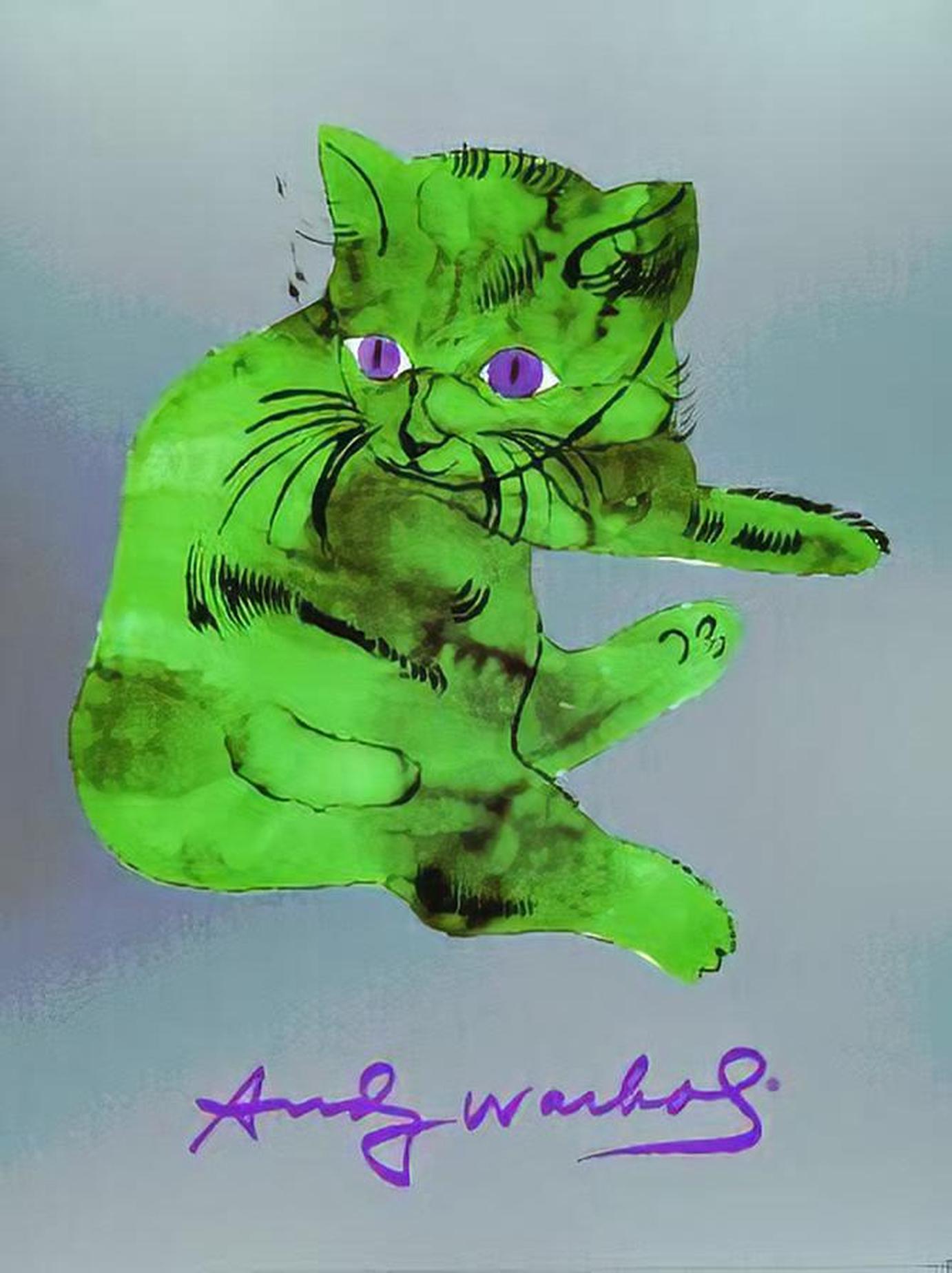
Before the Campbell's soup cans, the Marilyn Monroe silkscreens, and the silver balloons of the Factory, Andy Warhol was one of the most successful commercial illustrators in New York City. This bright green feline, A Cat Named Sam, offers a glimpse into a softer, more personal, and surprisingly whimsical chapter of the famous Pop artist's career.
The Story It Tells
In 1954, Warhol self-published a limited-edition book titled 25 Cats Name Sam and One Blue Pussy. At the time, Warhol lived in a New York apartment filled with cats, almost all of whom were supposedly named Sam. The book was a collaborative, handmade project; Warhol drew the cats, and his mother, Julia Warhola, provided her distinctive, looping calligraphy for the text. The vibrant green color and startling purple eyes of this particular cat reflect Warhol's playful approach to color and subject matter, treating his household pets not with academic realism, but as decorative, charismatic figures.
The History It Hides
This piece perfectly illustrates Warhol's signature early technique: the blotted line. Before he turned to the mechanical precision of photographic silkscreen printing, Warhol sought a way to give his illustrations a printed, slightly detached feel while maintaining a hand-drawn energy. He would draw a design in ink on a non-absorbent piece of paper, tape it to a blank sheet, and press them together. The resulting blotted line was broken, varied, and inherently reproducible—a crucial stepping stone toward his later Pop Art philosophy of mass production. He and his friends would then hand-color the blotted outlines using brilliant watercolor washes, often hosting informal coloring parties.
Look Closer
The blotted line: Notice the ink lines defining the cat's fur, whiskers, and paws. They are not smooth or continuous, but rather fragmented and slightly smudged, giving the drawing a nervous, lively energy.
Color contrast: The use of an unnatural, acid-green body paired with striking purple eyes (and a matching purple signature) demonstrates Warhol's emerging genius for bold, flat, and unconventional color palettes.
The attitude: Despite the simple wash, the cat's posture—mid-groom or mid-stretch—captures the distinct, aloof personality common to house cats.
Why It Matters
A Cat Named Sam reminds us that the pioneers of major art movements rarely started fully formed. By looking at Warhol's early commercial and private work, we see the roots of his obsession with reproduction, his flair for striking color, and a sense of intimacy that is often overshadowed by his later, cooler Pop Art persona.
----------------------------------------------
Follow this feed now to discover and understand one remarkable Pop Art artwork every day!
Similar feeds are available for Abstract Art, Art Nouveau, Baroque, Color Field Painting, Cubism, Expressionism and Fauvism, Impressionism and Post-Impressionism, Minimalism, Realism, Renaissance, Romanticism and Symbolism.