

Discover the simplicity, precision, and quiet power of Minimalism, one remarkable artwork at a time.
Each lesson introduces one work, explores its forms, materials, and use of space, reveals the ideas behind it, highlights important visual details, and explains why the work matters.
Sample full lesson from this feed:
----------------------------------------------
Aught
The Lesson
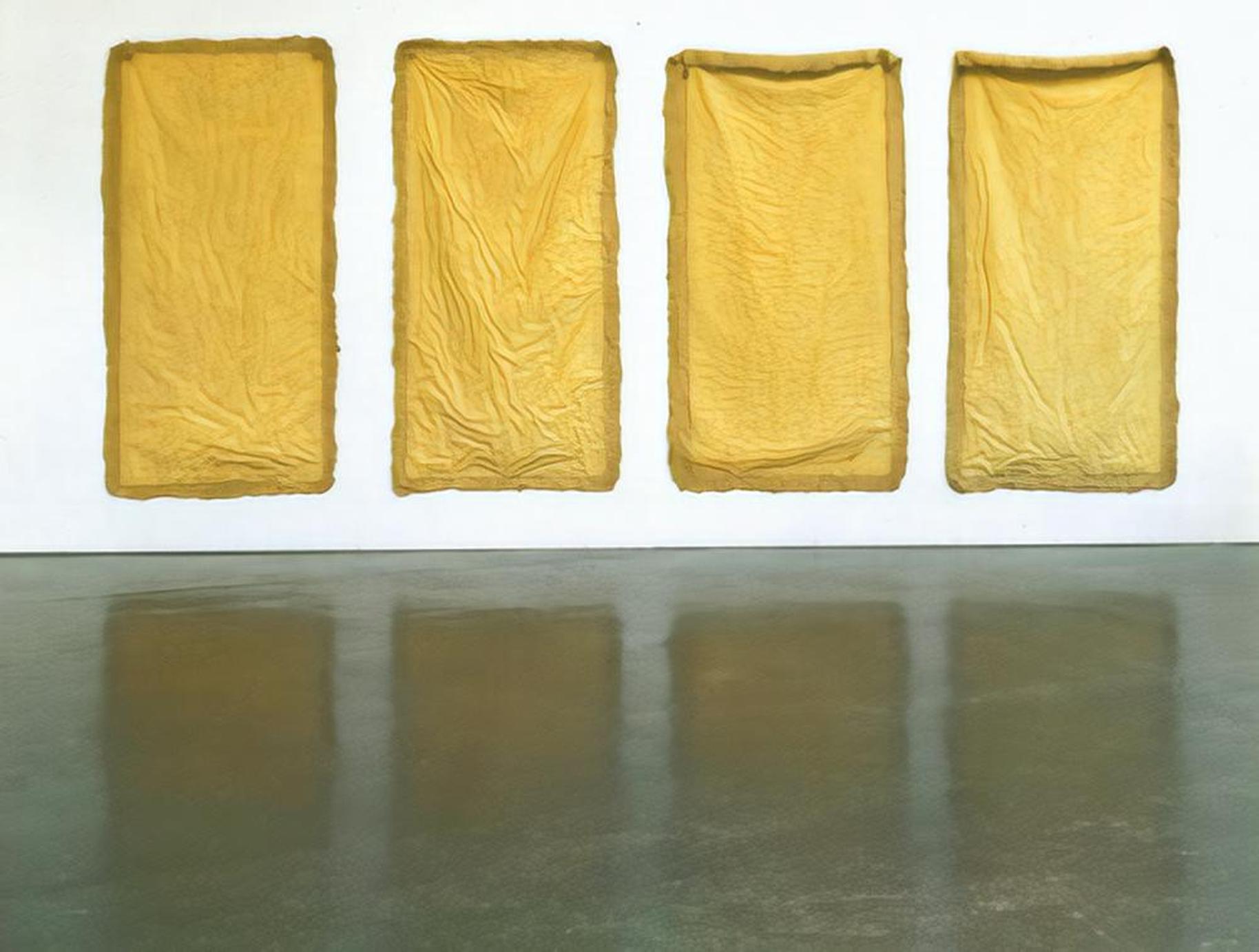
At first glance, Eva Hesse’s Aught might look like four simple, yellowed rectangles hanging on a stark white wall. But step closer, and the strict, industrial perfection usually associated with Minimalist art begins to break down. Hesse was a pioneer of what became known as Post-Minimalism, a movement that injected organic, bodily, and highly unpredictable elements into the rigid geometric language of the 1960s.
The Story It Tells
Rather than using cold steel or factory-made plastics, Hesse turned to liquid latex. She applied this experimental rubber over canvas, allowing it to pool and dry into wrinkled, sagging, skin-like surfaces. The four panels share the exact same dimensions, yet because of the unruly nature of the material, no two are truly identical. They slump, buckle, and catch the light in uneven, almost vulnerable ways, challenging the idea that art must be rigid or permanent.
The History It Hides
When Hesse created this piece in 1968, she was purposefully challenging the factory-made aesthetic dominating the New York art world. While her peers prized polished objects that looked as though human hands had never touched them, Hesse wanted her art to feel alive, absurd, and deeply human. Latex is inherently unstable; it yellows, hardens, and decays over time. Because of this, the aging process of the artwork itself becomes a crucial part of its meaning, transforming a once-static object into a living record of time.
Look Closer
The surface texture: Notice how the latex gathers and wrinkles, evoking the feeling of aged skin, heavy drapes, or dried organic matter.
The irregular edges: See how the borders are rough and uneven, defying the sharp, clean lines expected in geometric abstraction.
The serial repetition: The four-part structure mimics Minimalist repetition, but subverts it entirely through the unique, hand-wrought flaws visible in each individual panel.
Why It Matters
Aught is a powerful reminder that art does not need to be indestructible to be profound. By intentionally choosing materials that are destined to change and eventually degrade, Hesse created a masterpiece that quietly mirrors the impermanence of the human condition.
----------------------------------------------
Follow this feed now to discover and understand one remarkable Minimalist artwork every day!
Similar feeds are available for Abstract Art, Art Nouveau, Baroque, Color Field Painting, Cubism, Expressionism and Fauvism, Impressionism and Post-Impressionism, Pop Art, Realism, Renaissance, Romanticism and Symbolism.