Discover the light, color, atmosphere, and artistic innovation of Impressionism and Post-Impressionism, one remarkable painting at a time.
Each lesson introduces one painting, explores the scene or story it presents, reveals the history behind it, highlights important visual details, and explains why the work matters.
Sample full lesson from this feed:
----------------------------------------------
The Amont Cliffs at Etretat, 1920
The Lesson
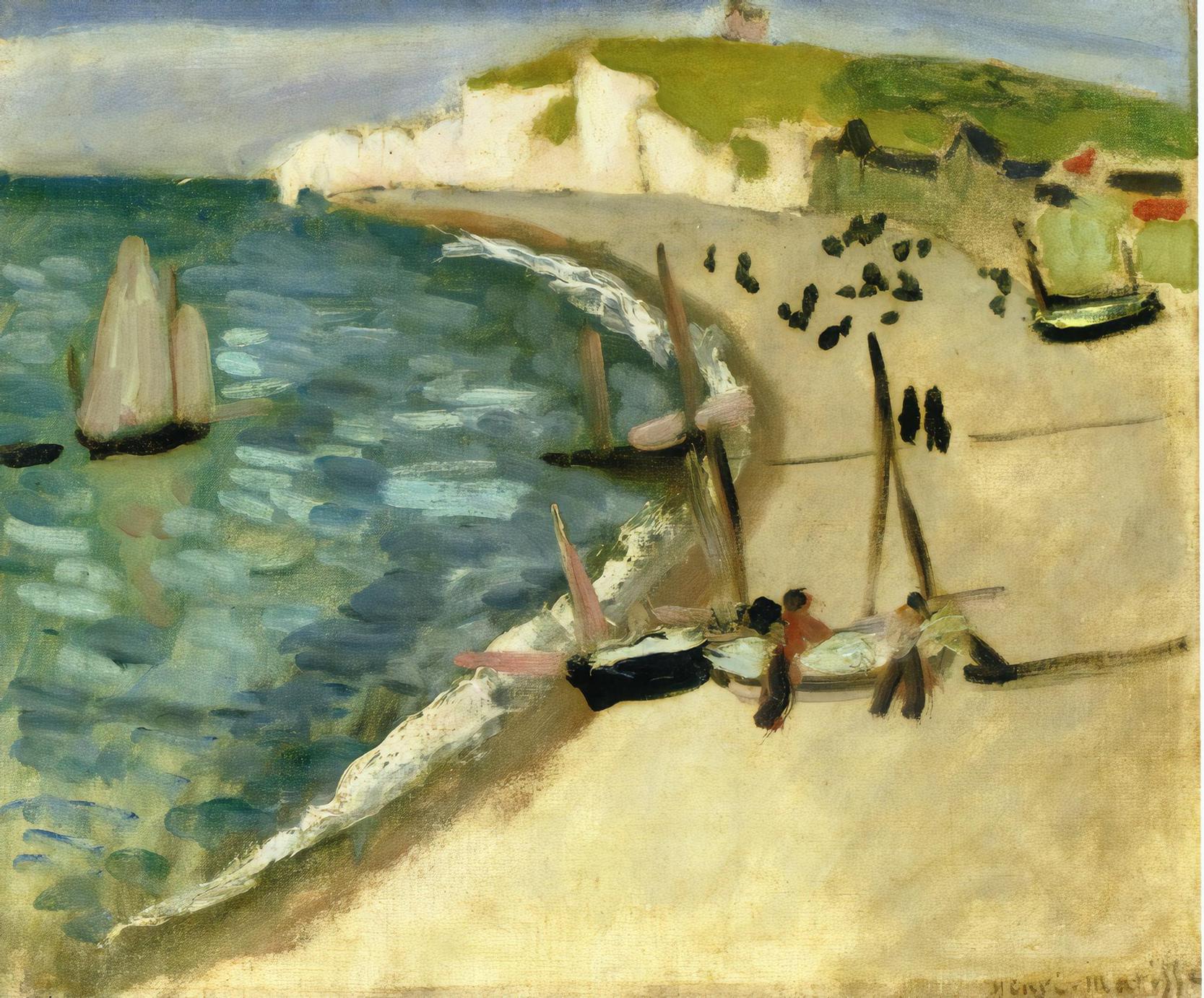
At first glance, this breezy coastal landscape feels like a classic Impressionist holiday scene. But look closer, and you will see the unmistakable hand of Henri Matisse. Painted during a summer trip to the Normandy coast in 1920, the work captures the sweeping curves and steep shingle beach of Etretat. Instead of focusing solely on the dramatic geology, Matisse splits the canvas diagonally, balancing the churning, energetic sea with a wide, tranquil stretch of sand and stone.
The Story It Tells
The painting drops us onto the famous pebble beach of Etretat. Fishing boats with tall masts are hauled out of the surf—a necessity on this steep coast. Tiny, swiftly painted figures dot the shoreline, some perhaps fishermen tending their nets, others holidaymakers taking in the sea air. The towering chalk cliff in the distance, the Porte d'Amont, anchors the background, standing quiet and solid against the active brushwork of the water.
The History It Hides
Etretat was already a legendary site in French art by the time Matisse arrived. Masters like Gustave Courbet and Claude Monet had famously painted its dramatic arches decades earlier. By tackling this iconic location in 1920, Matisse was engaging in a dialogue with his predecessors. However, this period in Matisse's career—often associated with his move to Nice—was marked by a softening of his earlier, wild Fauvist colors. Here, he explores a more relaxed, naturalistic palette while retaining his brilliant shorthand for form and light.
Look Closer
The water: Notice the short, choppy, horizontal dashes of blue, teal, and white. They create a lively, shimmering texture that contrasts sharply with the smooth, sweeping beach.
The figures: Matisse does not paint detailed people; he uses quick dabs of black, red, and ochre to suggest posture and movement with remarkable economy.
The composition: The strong diagonal line of the shoreline creates a dynamic tension, pushing the eye upward toward the cliffs and the narrow sliver of sky.
Why It Matters
This painting matters because it reveals how a revolutionary artist responds to a traditional subject. Matisse did not need to invent wild new colors to make the scene his own; instead, he used his masterful sense of balance, fluid brushwork, and simplified forms to breathe fresh, quiet life into one of France's most famous landscapes.
----------------------------------------------
Follow this feed now to discover and understand one remarkable Impressionist or Post-Impressionist painting every day!
Similar feeds are available for Abstract Art, Art Nouveau, Baroque, Color Field Painting, Cubism, Expressionism and Fauvism, Minimalism, Pop Art, Realism, Renaissance, Romanticism and Symbolism.