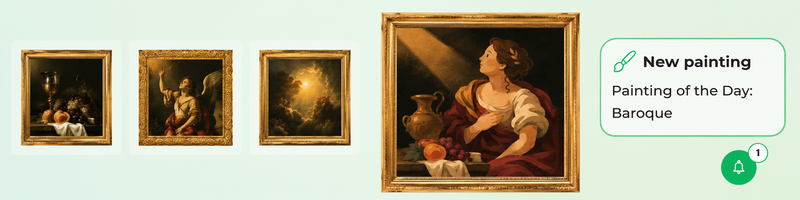
Discover the drama, grandeur, and powerful emotion of Baroque art, one remarkable painting at a time.
Each lesson introduces one painting, explores the story it tells, reveals the history behind it, highlights important visual details, and explains why the work matters.
Sample full lesson from this feed:
----------------------------------------------
A Maid Asleep
The Lesson
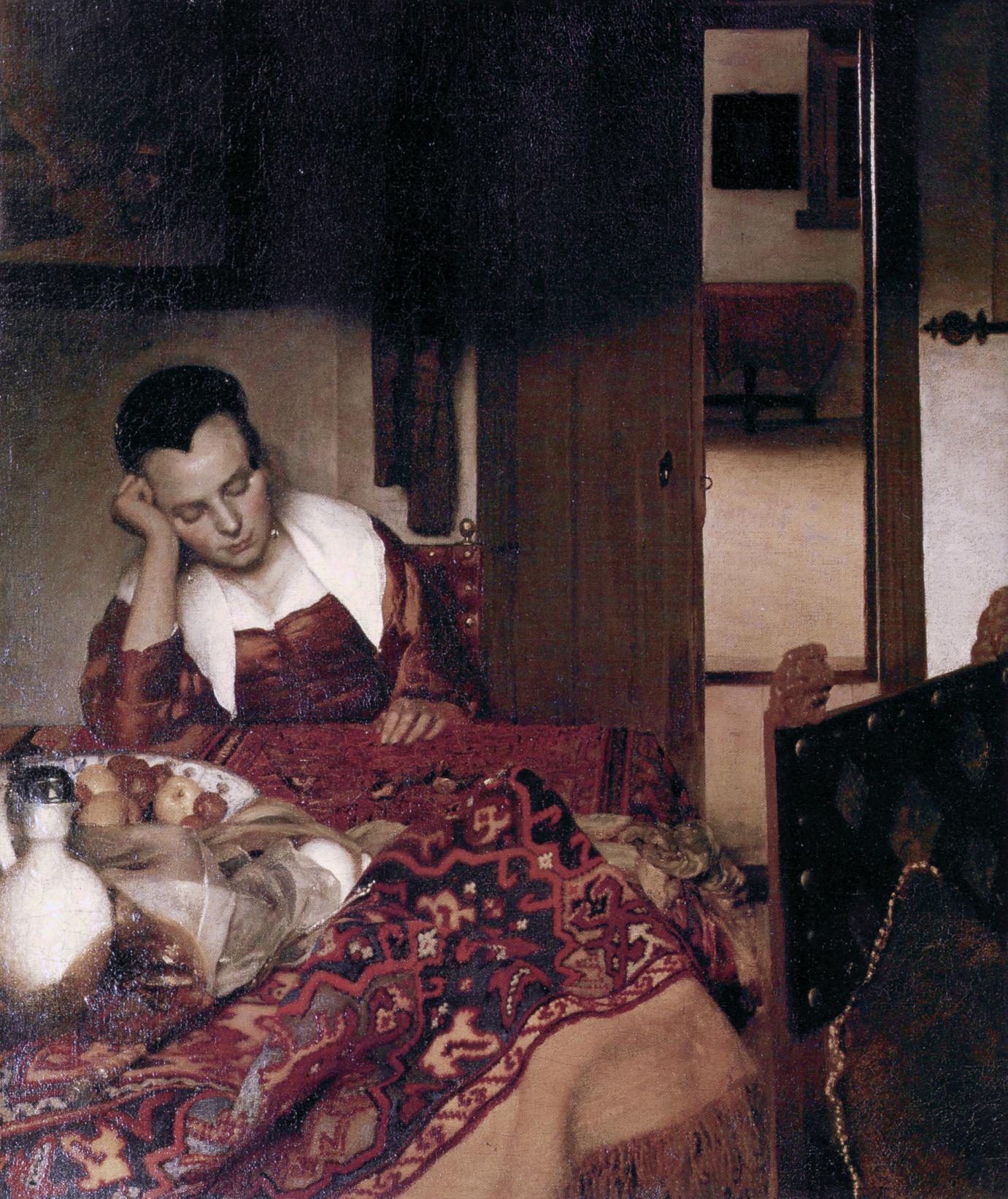
Step into the quiet, slightly heavy atmosphere of a 17th-century Dutch home. Johannes Vermeer is famous for his tranquil, luminous interiors, but this early work feels a bit different—warmer, darker, and more secretive. A young woman rests her head on her hand, dozing at a table covered by a thick, patterned carpet. The air feels thick with stillness, pulling us into a deeply private moment.
The Story It Tells
To the modern eye, this is simply a tired woman taking a well-deserved break. However, to a 17th-century Dutch viewer, there were subtle clues suggesting a different narrative. The white ceramic wine jug and the slightly disordered bowl of fruit often hinted at overindulgence or idleness in the moralizing visual language of the day. Yet, Vermeer does not seem to judge her. By shrouding her in soft light and warm shadows, he turns a conventional moral warning into a scene of profound human vulnerability and peace.
The History It Hides
This painting represents a turning point for Vermeer. Underneath the painted surface, modern X-rays have revealed that the artist originally included a man in the background doorway and a dog in the foreground. By choosing to paint them out, Vermeer shifted the entire mood of the canvas. It stopped being a standard, busy domestic narrative and became a psychological study of solitude. The open door, a classic Dutch device known as a doorkijkje, now leads only to an empty, sunlit room, heightening the sense of quiet mystery.
Look Closer
The table carpet: Notice the rich, thick folds of the Oriental rug. Vermeer painted these expensive imported textiles with tiny, bright dots of paint to mimic the texture of the wool catching the light.
The doorway: Look at how the dark frame of the open door dramatically pushes the young woman forward into our space, while the bright room beyond creates an illusion of deep, receding space.
The geometry: See how the tilted back of the chair in the lower right corner perfectly balances the leaning posture of the sleeping maid, anchoring the composition.
Why It Matters
This painting is a masterclass in editing. It shows us how an artist's decision of what to leave out is just as important as what they put in. By removing the extra figures, Vermeer forced us to look closely at a single, quiet moment, turning an ordinary domestic scene into an enduring meditation on stillness.
----------------------------------------------
Follow this feed now to discover and understand one remarkable Baroque painting every day!
Similar feeds are available for Abstract Art, Art Nouveau, Color Field Painting, Cubism, Expressionism and Fauvism, Impressionism and Post-Impressionism, Minimalism, Pop Art, Realism, Renaissance, Romanticism and Symbolism.