Logical fallacies are essentially bugs in human reasoning. They are structural defects where the conclusion simply doesn't compute from the data provided. Instead of relying on sound proof, fallacies use rhetorical tricks, distraction, and distortion to sell bad ideas.
This daily feed trains your brain to spot these defects instantly. Every day, you will receive a direct, mechanical breakdown of a single logical fallacy, exposing exactly how it manipulates logic to appear valid in the real world.
Sample full lesson from this feed:
----------------------------------------------
Is–ought problem
Overview
philosophical problem articulated by David Hume in 1739 about how one can deduce prescriptive statements (what ought to be) from descriptive statements (what is)
Also known as: Hume's law, Hume's guillotine, fact–value gap, is–ought distinction
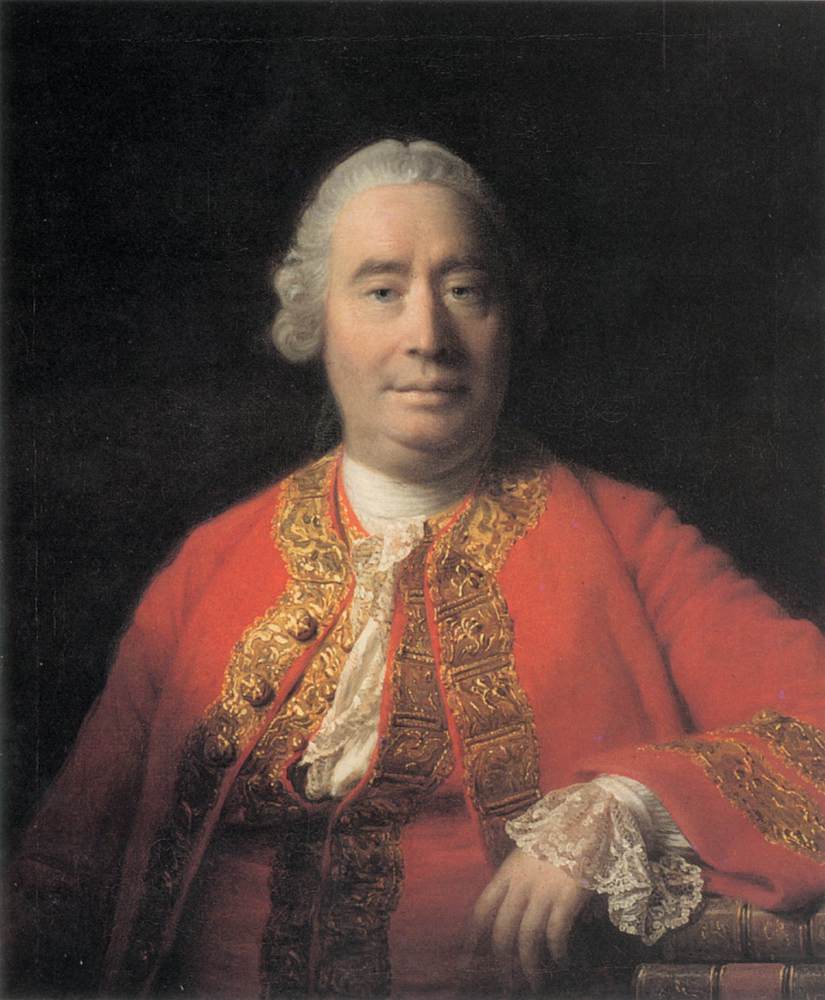 David Hume, famous 18th-century Scottish philosopher, historian, and economist
Explanation
The is–ought problem is the question of whether moral statements about what ought to be can be inferred from objective statements about what is. It was first articulated by the 18th-century Scottish philosopher David Hume, who saw a significant difference between descriptive statements (about what is) and prescriptive statements (about what ought to be). He argued that it is not obvious how one can coherently transition from descriptive statements to prescriptive ones.
Hume's law or Hume's guillotine is the thesis that an ethical or judgemental conclusion cannot be inferred from purely descriptive factual statements.
A similar view is defended by G. E. Moore's open-question argument, intended to refute any identification of moral properties with natural properties, which is asserted by ethical naturalists, who do not deem the naturalistic fallacy a fallacy.
The is–ought problem is closely related to the fact–value distinction in epistemology. Though the terms are often used interchangeably, academic discourse concerning the latter may encompass aesthetics in addition to ethics.
Image credit: Creator: Allan Ramsay · Credit: Web Gallery of Art · License: Public domain · Image source
Text source: Wikipedia contributors, “Is–ought problem”. Revision 1368498417, 2026-08-09. Licensed under CC BY-SA 4.0.
----------------------------------------------
Follow this feed now to discover and understand one fascinating logical fallacy every day!