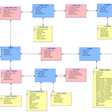
Loading multi-temporal data into Data Vault is quite simple, a explained in the previous blog post of this series. But how can we extract the current data in a simple and convenient way to populate Data Marts?
In
Receive updates from Data Warehousing with Oracle for free, starting right now.
We can deliver them by email, via your phone or you can read them from a personalised news page on follow.it.
This way you won't miss any new article from Data Warehousing with Oracle. Unsubscribe at any time.
Site title: Data Warehousing with Oracle | Dani Schnider's Blog
Is this your feed? Claim it!
Loading multi-temporal data into Data Vault is quite simple, a explained in the previous blog post of this series. But how can we extract the current data in a simple and convenient way to populate Data Marts?
In
Data change tracking is a key concept in any data warehouse and many other analytical systems. Rather than explaining the same concepts over and over again, I decided to write a blog series on this topic. This might also be of interest to others – perhaps even to you.
For my current customer – an insurance company – we are in the process of developing a data pl...
Filtering analytic functions was not straight-forward in Oracle and most other databases. Oracle 26ai now supports the QUALIFY clause in SQL. It works like a WHERE condition, but can be used for analytic functions.
Filtering Analytic Functions in OracleAnalytic functions (also known as “window functions”) are available in Oracle databases since long ago. The...
If you are planing to develop a new data warehouse or replace an existing one, the book “Data Engine Thinking” is a good choice to read. Also if you are interested in data architecture, data modelling, code automation or in an interesting story about a fictitious IT company.
At the TDWI Conference 2025 in Munich, I met